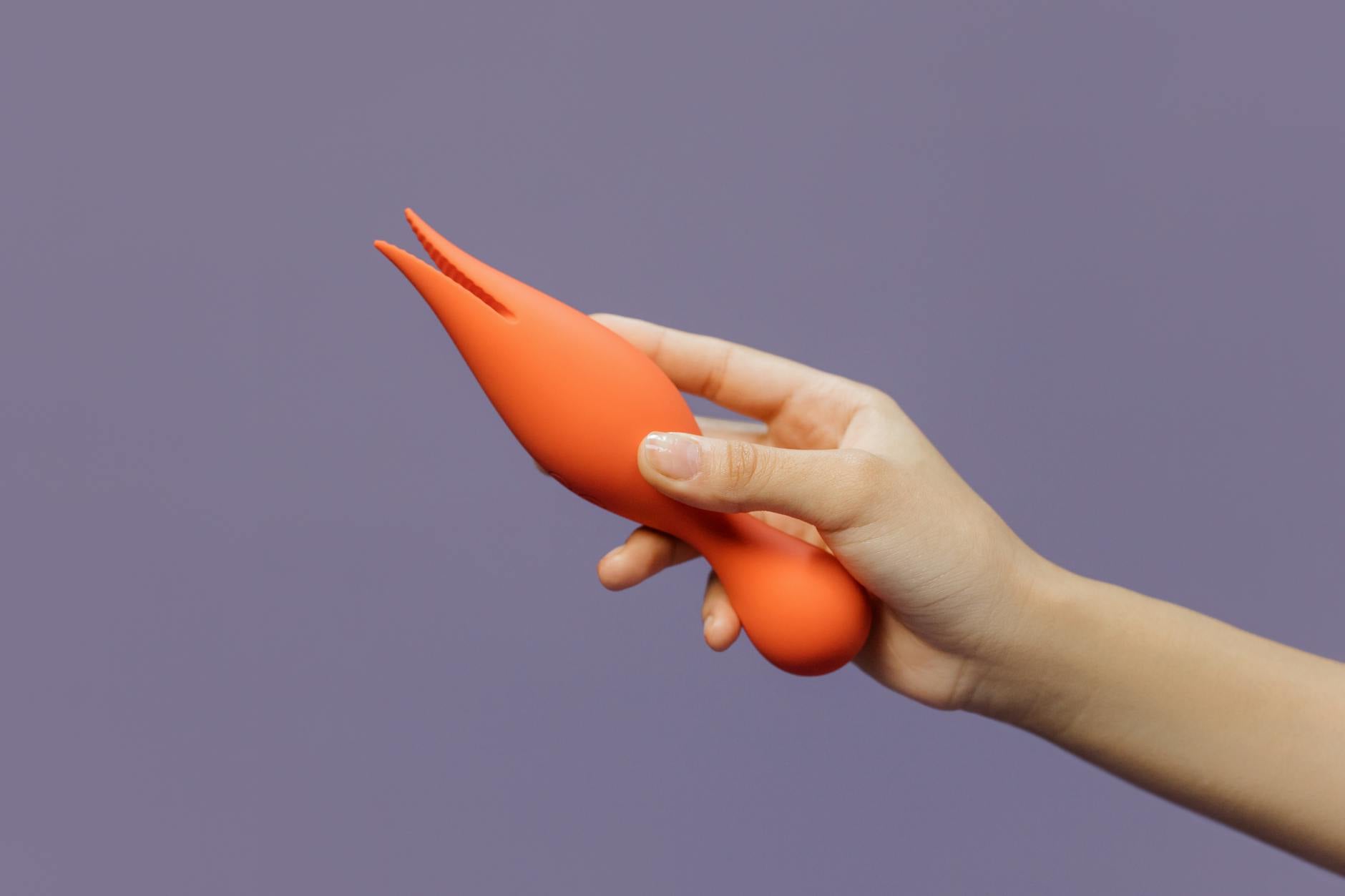
The vibration myth we need to retire
For decades, the sex toy conversation centered on one simple premise: faster vibration equals more pleasure. It made sense on paper. More stimulation, more sensation, more orgasms. Except that's not actually how clitoral pleasure works, and millions of people have been chasing the wrong metric because of it.
Here's the thing I tell clients regularly: vibration alone is only half the story. The clitoris doesn't just respond to movement. It responds to pressure, tension, and suction in ways that traditional vibrators can't deliver. When you add suction to the mix, as lemon vibrators do, you're not just adding a feature. You're changing the entire neurological conversation between your toy and your body.
How the clitoris actually responds to stimulation
Let's talk anatomy for a second, but I promise I'll keep it practical. The clitoris has roughly 8,000 nerve endings concentrated in a space smaller than a pea. That density matters because it means the organ is exquisitely sensitive to different types of input.
When a traditional vibrator makes contact, it delivers movement. The nerves fire in response to that oscillation. But they habituate quickly. That's why many people find that standard vibration feels intense at first and then plateaus. The nerve receptors get used to the rhythm, and after a few minutes, you need either more intensity, a different pattern, or a break.
Suction works differently. Instead of oscillating against tissue, it creates a gentle vacuum that pulls and releases rhythmically. That changes the type of receptor firing and actually delays habituation. Your nerves stay engaged longer because the sensation isn't a rhythm they can predict and tune out. Lemon vibrators, which combine both suction and vibration, essentially give your clitoris two different languages to respond to at once.
Why suction feels completely different
Think of it this way: when you use a standard vibrator, the sensation is concentrated on the surface of the tissue where contact happens. Suction, by contrast, engages deeper structures. It pulls the clitoral glans into the chamber of the toy, creating stimulation that involves not just the tip of the clitoris but also the surrounding tissue and the internal structures beneath.
This is why so many people report that suction feels more "full" or "complete" than vibration alone. It's not preference or imagination. It's literally engaging more tissue and more nerve pathways at the same time.
For people with reduced clitoral sensitivity, this matters significantly. If you've struggled with numbness from prolonged vibrator use, hormonal changes, or certain medications, switching to a lemon vibrator can feel like you've found sensitivity you thought was gone. You haven't recovered it. You've simply switched to a stimulus your nerves respond to more readily.
The research actually supports this
Studies on air-pulse technology (the clinical term for what lemon vibrators do) show higher rates of orgasm achievement compared to traditional vibration alone. One 2016 review found that air-pulse devices had success rates around 92% for reaching orgasm, compared to roughly 65% for standard vibrators.
That gap isn't small, and it's not because people using suction toys are somehow more skilled. It's because the stimulus itself is more effective at triggering the neurological cascade that leads to orgasm. The mechanism is different, and for many bodies, it's measurably better.
For people over 40, or anyone experiencing hormonal shifts that thin clitoral tissue, this difference becomes even more pronounced. Vibration can feel harsh or overstimulating on delicate tissue. Suction is gentler by design because it distributes pressure across a larger area rather than concentrating it at a single point.
When vibration still matters
I don't want to make this sound like traditional vibrators are obsolete. They're not. Some people genuinely prefer the directness of vibration. Some clitoral types respond better to pure oscillation. And honestly, variety is its own pleasure.
What matters is understanding that suction and vibration are different tools for different jobs. A lemon vibrator gives you both, which is why so many people who felt stuck with traditional vibrators suddenly find themselves having orgasms they didn't think were possible. The toy isn't magic. It's just finally speaking the language your body understands.
If you've ever felt like you needed "more power" or "more patterns" from a vibrator, it's worth asking whether the problem was intensity at all. Sometimes what feels like a sensitivity issue is actually a mismatch between the type of stimulus and what your clitoris actually responds to. When you shift to suction, you might discover you need less intensity, not more.
The partner angle
If you use lemon vibrators with a partner, this neurological difference also changes the dynamics. Because suction doesn't require the same direct manual pressure, it leaves more room for your partner to be involved in other ways simultaneously. They can use their hands, mouth, or body without competing for the same real estate.
With traditional vibration, there's often an "either-or" quality. Either they're using the vibrator or they're using their fingers. Suction-based toys create an "and" situation. Your partner's touch can amplify the experience rather than compete with it.
Practical differences you'll notice immediately
When you switch from traditional vibration to a lemon vibrator, expect these real-world changes.
First, orgasms typically arrive faster. We're talking minutes instead of sometimes 15, 20, or never. That's not about being faster at your body. It's about stimulation efficiency.
Second, sensations feel fuller and less likely to fade. Traditional vibrators often require you to keep increasing intensity to maintain sensation. Lemon vibrators maintain engagement at lower intensities because suction isn't subject to the same habituation curve.
Third, the experience feels more controllable. You're not at the mercy of a rhythm getting predictable. Suction creates novelty even when the pattern stays the same because it's engaging different tissue structures.
How to know if suction is right for you
Here's my honest take: if you've tried multiple traditional vibrators and never quite found "it," suction is genuinely worth exploring. If standard vibrators have felt numbing or overstimulating at every intensity level, suction's distributed pressure might be the answer.
You don't need to spend a lot to test this. The Lemon Clitoral Vibrator has all the suction technology at a price point that lets you experiment without huge commitment. Most people know within one or two sessions whether this is their thing.
If you're curious about the difference but nervous about suction itself, that's completely valid. Best Lemon Vibrators for Beginners Nervous About Suction walks through how to approach it without pressure.
The bottom line
Vibration isn't bad. It's just incomplete. For thousands of years, human bodies figured out that suction was valuable for pleasure. Lemon vibrators bring that ancient knowledge into modern design, giving you a tool that works with your neurology rather than against it. Whether that changes everything for you or just adds another option to your toolkit, knowing the difference is the first step.
People also ask
How does suction stimulation compare to vibration for clitoral orgasms?
Suction and vibration engage different nerve pathways. Vibration creates surface-level oscillation that can habituate quickly, while suction distributes pressure across wider tissue and maintains engagement longer. Studies show suction has higher orgasm achievement rates (around 92% versus 65% for vibration alone). For many people, suction feels more complete and requires less intensity to reach climax. Some bodies prefer one, some prefer both together, and some prefer traditional vibration. The key is experimenting to find what your nervous system responds to most readily.
Why do lemon vibrators feel less intense than traditional vibrators at the same power level?
Lemon vibrators aren't less intense. They're differently intense. Suction distributes force across a larger area rather than concentrating it at a single point, which can feel gentler even while delivering more total stimulation. If you're used to traditional vibrators, suction might feel less sharp or localized because it's engaging deeper structures rather than just the surface. That's a feature, not a bug, especially for people with sensitive tissue or reduced clitoral sensitivity from hormonal shifts or numbness.
Can I use a traditional vibrator and a lemon vibrator together?
Technically yes, but it's rarely necessary. The benefit of a lemon vibrator is that it already combines suction with some vibration, giving you both stimulus types from one device. Using two toys simultaneously can feel overwhelming or confusing rather than enhanced. If you want variety, alternating between a lemon vibrator and a traditional vibrator across sessions makes more sense than combining them in one experience. Save the stacking for situations where you're adding internal and external stimulation.
Do lemon vibrators work better for people with clitoral numbness?
Often yes. Numbness typically stems from either habituation (nerves adapted to a predictable rhythm) or tissue sensitivity changes. Suction delays habituation by engaging different receptor types, and the distributed pressure is gentler on thin or sensitive tissue. If you've experienced numbness with traditional vibrators, a lemon vibrator's different stimulus often reawakens sensation that felt lost. That said, numbness can also signal other issues like nerve damage or hormonal imbalance, so if it's new or severe, getting checked by a provider is still important. A lemon vibrator might help, but it's not a substitute for medical evaluation.
Why do lemon vibrators work better after hormonal changes?
Hormonal shifts thin clitoral tissue and reduce blood flow to genital tissue, making it more sensitive to direct, intense pressure. Traditional vibrators concentrate force at a small point, which can feel too intense or even painful on thinned tissue. Lemon vibrators distribute suction pressure across a wider area, creating gentler overall stimulation that still engages the clitoris thoroughly. Additionally, suction is better at maintaining engagement even at lower intensity levels, so you're not fighting to find a sweet spot that doesn't exist with standard vibration.
Should I choose suction or vibration if I'm sensitive?
If standard vibration has been too intense or numbing, suction is almost always the better starting point. Its distributed pressure feels gentler, and the stimulus itself maintains engagement without requiring high intensity. Start at the lowest suction setting and work up rather than jumping to maximum power. If you find suction still too intense, you might be dealing with a separate sensitivity issue worth discussing with a healthcare provider. But most people with vibration sensitivity find suction a complete game-changer.
The bottom line on lemon vibrators
Lemon vibrators aren't just another toy option. They represent a fundamental shift in how we think about clitoral stimulation. By combining suction with vibration, they engage your nervous system differently, maintain sensation longer, and work effectively at lower intensities. If traditional vibrators have left you frustrated, numb, or searching for something you couldn't name, this is what you've been looking for. Your pleasure matters, and sometimes that means switching the tool, not questioning your body.