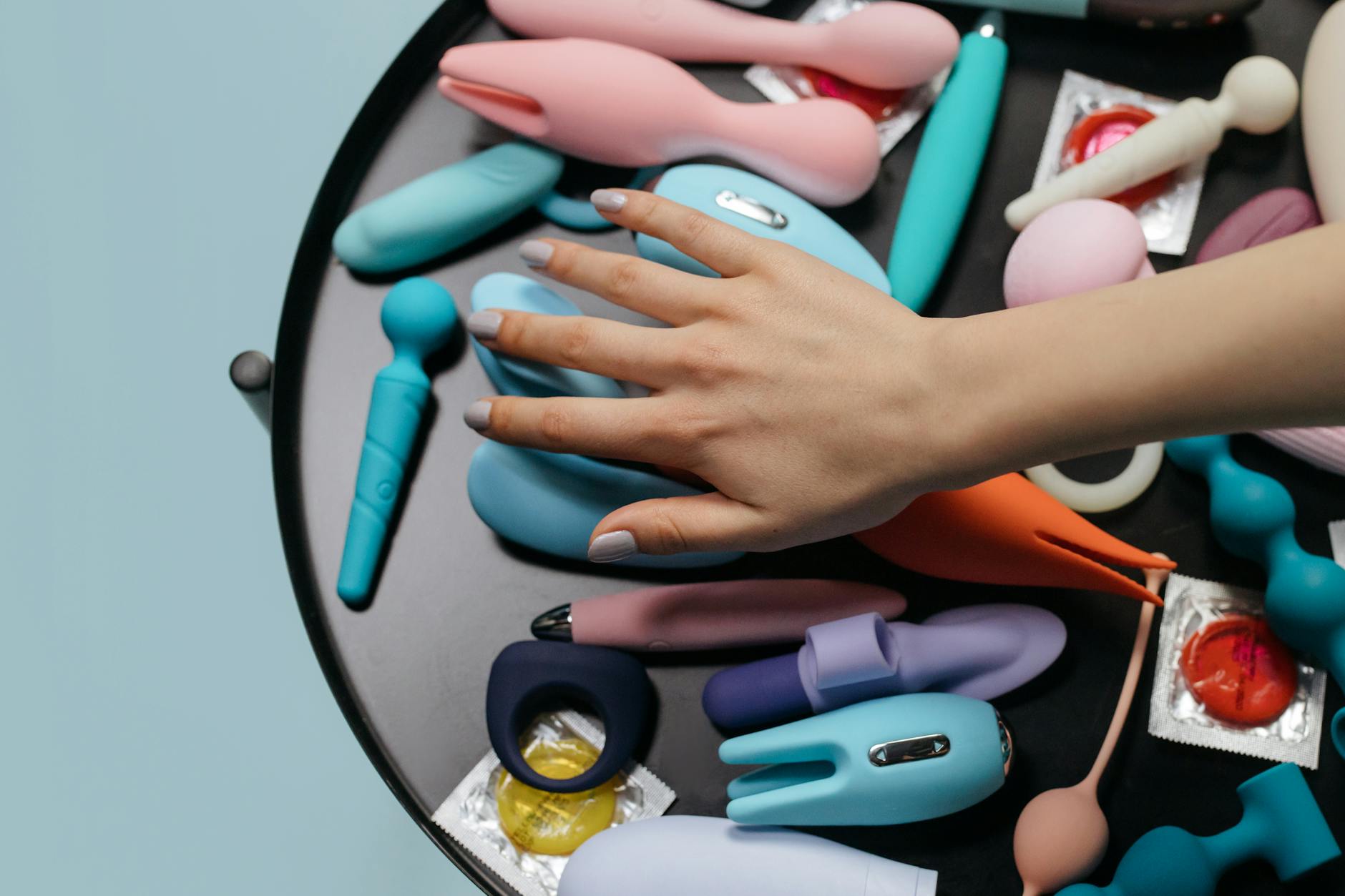
Let's talk about the pause
Months without intimacy happen. A health crisis, kids at home, relationship tension that just never quite resolved, work stress that consumed everything. The reasons are infinite and usually completely understandable. But here's what's tricky: the longer the pause stretches, the more it starts to feel like a permanent condition instead of a temporary one.
And then when you do want to restart, the weight of all that time hangs over it. The silence feels bigger than it is. You wonder if you've forgotten how. Or if your partner has. Or if the fact that you didn't touch for six months means something deeper that can't be fixed by touching again.
It can all feel so heavy that you don't touch at all.
What actually needs to happen first
Before any tool, before lemon vibrators, before anything physical. You need to acknowledge that restarting isn't picking up where you left off. It's a new beginning. That matters because it shifts the pressure entirely.
When you're restarting intimacy after a long gap, you're not trying to recapture the version of your relationship that existed six months ago. You're building something new with the people you are right now. That's actually easier in some ways, because it means there's no scorekeeping about lost time. There's no comparing this to how it was. It's just. This.
If you're doing this with a partner, say that out loud. "This is new. I'm not expecting us to be exactly the same as we were." That sentence does more work than you'd think.
Why lemon vibrators specifically help with reconnection
Three specific reasons.
First: they remove performance anxiety. When you've been away from physical intimacy for months, the body sometimes forgets what responsive feels like. Blood flow takes time to return. Arousal doesn't come as quickly. Sensation can feel distant. If you're trying to do all this with just touch and attention, both partners can feel the lag and read it as rejection instead of physiology. A lemon clitoral vibrator cuts through that. The suction mechanism does work that hands alone can't do, which means pleasure happens faster and feels more reliably. That removes the "am I doing this right" anxiety that kills reconnection.
Second: they create a neutral focal point. When you've had tension or a long gap, sex suddenly carries a lot of emotional freight. Am I doing enough. Am I wanting this enough. Why did we stop. Is this fixing things or is it just sex. A vibrator gives you both something to look at instead of each other's face, which weirdly makes it easier to be intimate. It's a small permission to just exist in sensation without narrating the emotional work.
Third: they work for solo reconnection. Not every relationship is ready to restart together. Sometimes you need to reconnect with your own body first. Lemon vibrators are intuitive enough for solo play that you can rebuild comfort with pleasure, tension, and arousal without the performance element. Then when you do choose to invite your partner in, you're not starting from zero.
How to actually start if it's been months
Longer warm-up window than usual. If you haven't been intimate in months, your body's arousal response has essentially been in standby mode. Budget 20 to 30 minutes of slower buildup. This isn't foreplay in the traditional sense. It's just low-pressure time. Kissing. Touch without agenda. Maybe starting a lemon vibrator on the lowest setting while you're still clothed, just to remind your nervous system what sensation feels like.
Start on pattern one. The lemon clitoral vibrators like the Lem have multiple settings for a reason. When you're restarting after a long pause, resist the urge to jump to higher intensities just to feel something. Lower patterns actually build arousal more sustainably. You're not chasing sensation. You're coaxing it back online.
Lubricant is your friend, even if you've used lemon vibrators before and never needed much. Time away from arousal means the body's natural lubrication takes longer to arrive. Using a water-based lube isn't a sign that something's wrong. It's a sign you're listening to what your body actually needs right now.
If you're restarting with a partner, talk about pressure beforehand. Say something like, "I want us to take our time here. There's no goal. We're just checking in with each other." That one sentence removes the silent pressure that things need to lead somewhere specific.
The emotional part (which is actually the physical part)
After months without intimacy, the body doesn't separate emotional and physical. The nervous system has learned that intimacy paused, which means it's cautious about reconnection. You might notice that even when things feel good, there's a tight feeling in the chest or a mental drift. That's not failure. That's your nervous system being careful.
Lemon vibrators help with this because the consistent, rhythmic sensation is actually calming to the nervous system. It's the opposite of unpredictable stimulation. If you're doing this with a partner, staying present matters more than achieving. Hold each other. Breathe together. If a thought about how long it's been pops up, just notice it and return to sensation.
If you're solo, the same applies. This isn't about reaching a specific outcome. It's about rebuilding the neural pathway that says "intimacy is available to me."
When to add complexity back in
Wait until reconnection feels boring before you make it more complicated. This is key. Once you've restarted a few times and it feels like a normal part of your rhythm again, then you can explore positions, longer sessions, multiple rounds. But in those first weeks, boring is actually the goal. You want intimacy to feel reliable and simple again.
What if something feels off
If pain shows up during or after, pause. Don't try to push through. After long periods without sex, sometimes the pelvic floor is tighter than usual, or tissues need time to adjust to sensation again. You might need extra lube, slower buildup, or a few more sessions before intensity ramps up. That's all normal.
If arousal just isn't happening, give it more time. The brain and body need repetition to rebuild pathways that have been dormant. Sometimes it takes three sessions before the nervous system believes intimacy is happening again. Sometimes it takes longer. That doesn't mean your desire is broken.
If you're restarting with a partner and one of you feels more ready than the other, that's the conversation to have. Use it as information, not judgment. "I'm excited to reconnect, but I notice I'm moving faster than you. Let's build this at a pace that works for us both." That's a conversation that actually deepens connection.
A note on expectations
Reconnection after months doesn't look like the movies. You probably won't have an instantly transcendent experience. You'll probably feel a little awkward at first. Your body might feel unfamiliar to yourself. Your partner might too. Lemon vibrators can't fix awkward, but they can make awkward feel less high-stakes. They turn the focus from "is this working" to "does this feel good." That shift alone changes everything.
You're not trying to reclaim lost time. You're building something with the person you are now, in your relationship as it exists right now. That's actually much more interesting than replicating the past.
Frequently asked questions
How long should I wait before restarting intimacy after a long gap?
There's no magic number. Some couples restart within weeks of deciding to. Others take months. The timeline that matters is the one where both partners feel reasonably willing, not pressured. If one person feels ready and the other isn't, that's the conversation to have first. Sometimes the barrier isn't physical at all. It's emotional. That needs to be named.
Can lemon vibrators help if my partner feels threatened by the restart?
This depends on what "threatened" means. If your partner is worried that you've lost attraction or that this is about infidelity, that's an emotional conversation that happens before the vibrator enters the room. If your partner is worried that the vibrator will replace them, using it together can actually ease that worry. Lemon clitoral vibrators work best when both partners see them as part of reconnection, not a substitute for it.
What if I'm doing this solo after months without intimacy?
Solo reconnection is actually valuable. You're rebuilding the neural pathways that say "my body is capable of pleasure." Start slowly, use lube even if you think you don't need it, and give your nervous system time to believe it. Three to four sessions over two weeks is a reasonable pace. You're not racing.
Does arousal take longer after a long gap?
Yes. Physiologically, the body's arousal response needs to be reactivated. It's not that your desire is broken. It's that the arousal pathway has been quieter and needs time to come back online. Expect warm-up time to be longer than you remember. This is actually an opportunity to slow down and enjoy buildup instead of always rushing to the finish.
Should I use numbing lube if sensation feels overwhelming during reconnection?
Not usually. If sensation feels overwhelming, it's more likely that your nervous system is reactivating and that's uncomfortable, not that sensation is truly too intense. Start on the lowest pattern and give yourself permission to pause. Numbing products mask the signal that something needs adjustment. Better to stay present and go slower.
What if we restart and then drift apart again?
That happens. Relationships aren't linear. If you reconnect and then intimacy pauses again, you'll know what to do next time. You've proven to each other that reconnection is possible. That changes the story. It's not "we can't recover from a gap." It's "we've done this before and we can do it again." That's actually a resource.
The restart is just the beginning
Reconnecting after months without intimacy isn't about returning to some perfect past version of your relationship. It's about building something real with the people you are right now. That's harder and also more durable. Lemon vibrators don't do the emotional work for you, but they do remove some of the pressure while that work happens. They let you focus on sensation and connection instead of performance.
If you're thinking about reconnecting, that's the first step. The physical part follows.