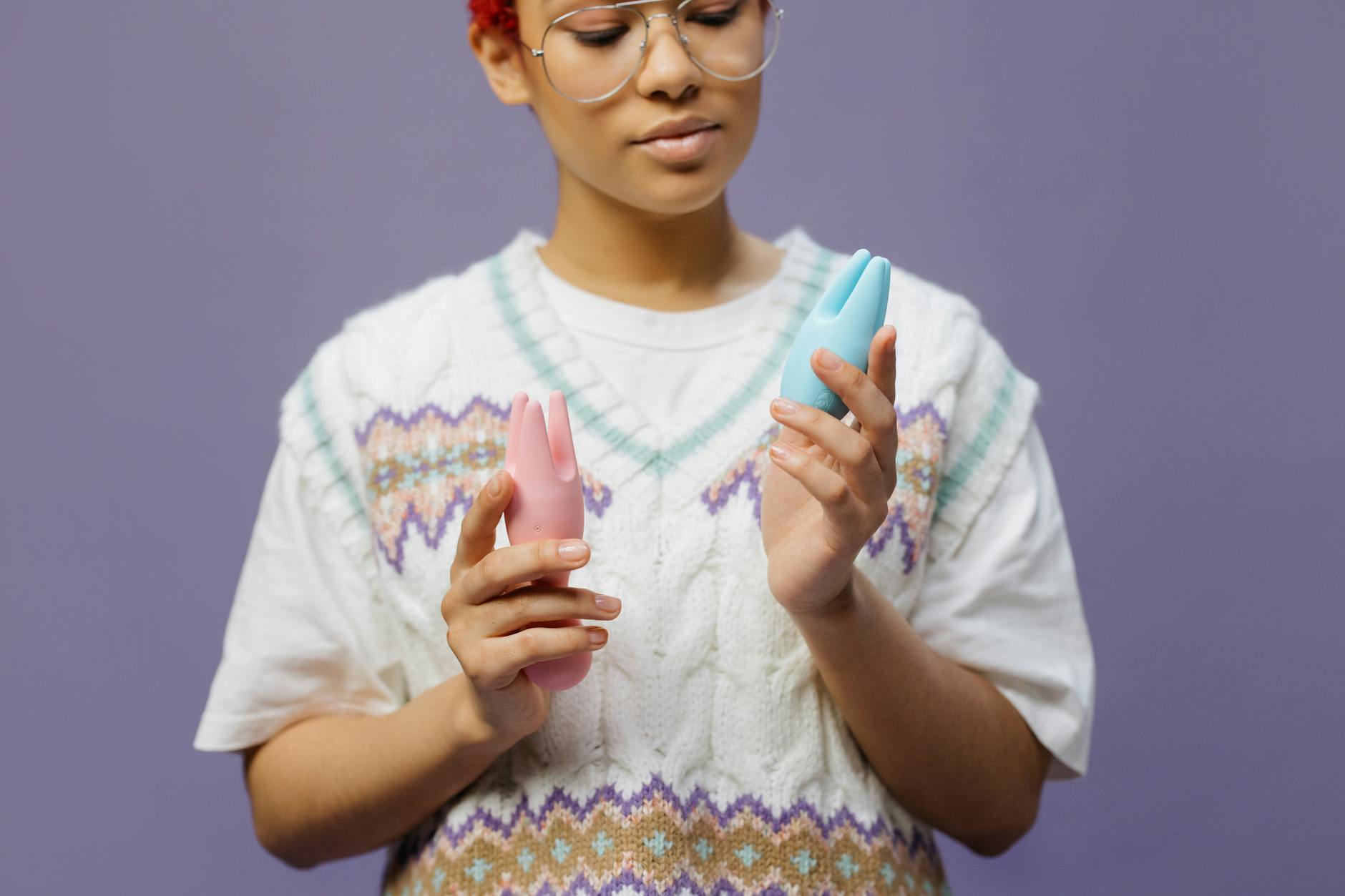
Here's the frustrating part about pleasure
You had an incredible orgasm last Tuesday. This Tuesday, same toy, same technique, same partner or solo session. Nothing. Your body feels locked. You wonder if something's wrong with you, or if the vibrator has lost its magic. Neither is true.
Pleasure is not a switch you flip the same way every time. It's a system with multiple moving parts: stress, sleep, where you are in your cycle, what you ate, how your nervous system feels about being touched in this particular moment. When you understand what actually controls your pleasure, you stop blaming yourself for inconsistency. You start building strategies around it.
Let's talk about what changes, why, and how to use your lemon vibrator reliably across all of those situations.
The nervous system is the real control panel
I work with couples who complain that pleasure "used to be easy" and now it feels unpredictable. What they're really noticing is that their nervous system is running the show more than they realized. Your clitoral vibrator can be perfect, but if your nervous system is in fight-flight mode, your body won't cooperate.
Think of your nervous system like a dimmer switch on a light. When you're relaxed, it's set to "pleasure mode." When you're stressed, anxious, in pain, or distracted, the dimmer drops. Your clit still has the same nerve endings, but the signal strength is lower. A lemon vibrator works brilliantly when you understand this.
Here's what matters: consistency isn't about finding the magic pattern or the perfect toy. It's about creating the conditions where your nervous system can actually receive pleasure.
Stress absolutely demolishes pleasure capacity
You probably already know this, but it's worth saying directly. When you're stressed, cortisol rises, blood stays in your core, and the tiny muscles in your genitals tense instead of relax. This is why you can't orgasm when your boss just fired half your team, or when you're fighting with your partner, or when you're worried about money.
The worst part is that stress does something sneaky to your perception: it makes you feel broken. "Why can't I come?" feels like a you-problem. It's not. It's a nervous-system-state problem.
Before you reach for your lemon clitoral vibrator, check your stress level. If you're running on adrenaline, take 10 minutes for actual breathing work first. Five deep breaths doesn't count. I mean the kind where you exhale for twice as long as you inhale. This signals safety to your vagus nerve, which is the main control panel for sexual response.
Sleep deprivation and hydration are unsexy but real
There's something almost embarrassing about admitting that you can't orgasm because you only got five hours of sleep. But that's the reality of how your body works.
When you're sleep-deprived, your nervous system is already in a mild stressed state. You're running on cortisol instead of a full tank of balanced hormones. Add a lemon vibrator to an exhausted body and you get effort instead of pleasure. Nothing's wrong with the toy. Your body just doesn't have the resources to respond.
Same with hydration. Sexual response requires blood flow. Your blood is mostly water. If you're dehydrated, blood moves sluggishly, and sensation dulls. I'm not saying you need to drink a gallon of water an hour before sex. But if you're chronically thirsty, your pleasure capacity absolutely suffers.
Consistency starts with basics: eight hours when you can get them, water throughout the day, food that doesn't leave you crashing. These sound boring next to the idea of finding the perfect toy. They're not. They're foundational.
Cycle changes matter way more than most people realize
If you have a menstrual cycle, your body's pleasure response genuinely changes throughout the month. Estrogen and progesterone shift how sensitive your clitoris is, how easily you become aroused, and how intensely you can orgasm.
Many of my clients find that they need different patterns from their lemon vibrator depending on where they are in their cycle. Right after your period, when estrogen is climbing, you might need less time to warm up. During the luteal phase, when progesterone is high, you might need more stimulation, slower patterns, and longer foreplay.
This isn't inconsistency. It's rhythm. Once you map it, you can work with it instead of fighting it.
Track for two months. Note where you are in your cycle and what patterns on your lemon sexual toy felt best. You'll see patterns emerge. Your pleasure isn't random. It's orchestrated by hormones you can actually predict.
Context and environment reshape sensation
You can have incredible solo sessions in your bedroom, but struggle in a partner's place. Or you can feel locked up at home and come easily in a hotel. This is real. Environment changes your sense of safety, permission, and distraction.
Your nervous system cares deeply about whether it trusts where you are. If you feel exposed, rushed, or like you have to be quiet, your body narrows. It's not prudish. It's survival instinct.
When consistency matters to you, you get to engineer your environment. That might mean locking your door, using a sound machine to mask noise, dimming lights, or even just telling your partner "I need 20 uninterrupted minutes." These aren't luxuries. They're the scaffolding that lets your body relax enough to feel pleasure.
Your lemon clitoral vibrator works the same anywhere. Your nervous system works better in some places than others. Remove the variables you can control.
Technique refinement helps way more than switching toys
Most people think inconsistency means "I need a better vibrator." Usually it means "I need to understand how my body responds right now."
Let me be specific. The Lem uses a suction pattern, not direct vibration. That matters because suction stimulates broadly across the clitoral network instead of just the surface. When you're exploring consistency with a lemon vibrator, the pattern matters more than searching for novelty.
Here's what actually moves the needle: starting at pattern one or two and spending time there instead of racing to intensity. Your body responds to gradual building way more reliably than to shock stimulation. When you rush to high patterns, you're fighting against what actually feels consistent.
Try this: spend ten minutes at pattern one. Notice what's happening. Are you warming up or deadening? Move to pattern two only when your body feels ready, not when your mind thinks you should. This is how you map individual consistency.
Different situations might need different starting patterns. When you're stressed but committed to pleasure anyway, pattern one might be enough. When you're well-rested and genuinely turned on, you might skip straight to pattern three. This isn't random. It's response.
Partner presence changes everything
If you're using lemon sexual toys with a partner, their energy absolutely shapes your consistency. An anxious partner, a distracted partner, or a partner moving too fast will tank your pleasure. A relaxed, present partner who lets your body lead transforms it.
This is one of the reasons I recommend that couples talk explicitly about tempo and pressure before reaching for any toy. "I need you to stay at this pattern while I tell you if I want to move" is unsexy language but brilliant practice. It means your partner isn't guessing, and you're not managing both your pleasure and their anxiety.
When your partner wants deeper intimacy with you, consistency emerges from safety and communication, not from better technique.
Medication, hormones, and physical health matter
Antihistamines, antidepressants, blood pressure meds, and birth control all affect sexual response. If your pleasure became inconsistent around the same time you started a new medication, talk to your doctor. This isn't a failure of your lemon clitoral vibrator or your body. It's pharmacology.
Same with hormonal shifts. If you're approaching menopause, dealing with thyroid changes, or managing PCOS, your baseline pleasure response genuinely shifts. You're not broken. Your system is operating under different hormonal conditions.
This is why I always ask clients: when did this start? What else changed? Sometimes the vibrator works fine. Your body just needs different support.
Building a consistency framework
Here's what I recommend: create a pleasure map. Over the next month, track three things every time you use your lemon vibrator:
- Your stress level that day (scale of 1-10)
- How much sleep you got the night before
- Which pattern felt best and how long it took to orgasm
After a month, you'll see your personal consistency pattern. You'll notice that on high-stress days, you need pattern one for fifteen minutes. On well-rested days, pattern two works in eight minutes. You're not broken. You're normal. You just needed the data.
Consistency isn't about forcing the same response every time. It's about understanding the variables and working with them. Your lemon vibrators work reliably. Your nervous system needs conditions to match.
FAQ: Pleasure inconsistency and your lemon vibrator
Why does my Lem vibrator work sometimes but not always?
Pleasure depends on nervous system state, not toy quality. Your vibrator is consistent. Your stress level, sleep, cycle phase, and environment are constantly shifting. When these align well, pleasure comes easily. When they don't, even the best lemon sexual toys feel ineffective. Track your conditions for a month to see your personal pattern.
Can lemon clitoral vibrators help with pleasure that feels numb or distant?
Sometimes. Numbness often signals that your nervous system is protecting you (stress, dissociation, emotional distance). A lemon vibrator can help your body remember sensation, but it usually works better alongside nervous system regulation work. Breathing, grounding, and addressing what made you numb matters as much as the toy.
Is it normal for my body to respond differently with different partners?
Completely normal. Safety, attraction, and comfort are huge. Your nervous system relaxes differently with different people. This isn't inconsistency. It's attunement. If one partner doesn't feel safe to you, your body will protect itself. That's healthy, not a problem to solve.
Should I change my lemon vibrator pattern based on my cycle?
Yes, if your pleasure already varies by cycle. Not all bodies notice cycle effects, but many do. If you find yourself needing longer warm-up times during certain weeks, start your sessions earlier in those phases. Your body's rhythm is useful information.
What if I can't orgasm even when I'm relaxed and rested?
Check medical factors first (medications, hormones, neurological changes). Then explore whether something emotional is protecting you. Sometimes inconsistent pleasure is your body saying "I'm not safe here" or "I have something else on my mind." Your lemon clitoral vibrator is a great tool, but it works best alongside emotional honesty.
Does using lemon vibrators too much make orgasms harder?
Not in the way people fear. Overuse can desensitize temporarily, but what usually happens is that your nervous system needs variety or rest. If you've been using high patterns daily for weeks, switch to pattern one for a week or take a break entirely. Your sensation will return.
The real consistency comes from you, not the toy
Your lemon vibrators are designed to work reliably. Your pleasure is reliable too. It's just not simple. It's shaped by stress, sleep, hormones, context, safety, and a hundred small things happening in your body and life.
Once you stop treating inconsistency as a problem and start treating it as information, everything shifts. Your body's not broken. It's just telling you what it needs to feel good.
If you want to dig deeper into how to work with your body's actual response patterns, reach out. I work with couples and individuals on exactly this: building pleasure that works in real life, not in a fantasy where nothing stressful ever happens.
Your pleasure deserves consistency. So does your understanding of how it actually works.