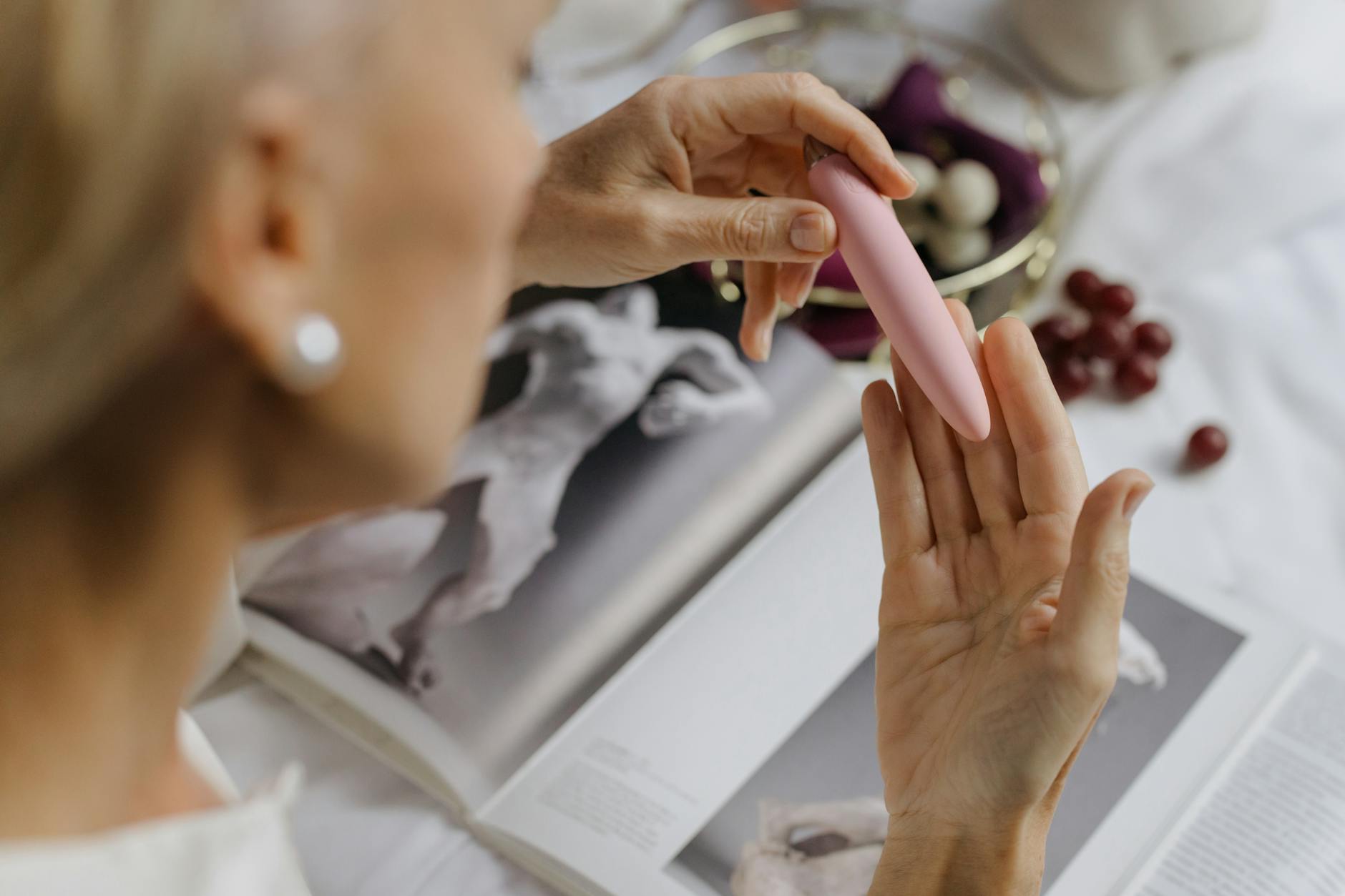
Here's the thing about arousal after hormonal shifts
Arousal doesn't disappear. It changes shape. Your body's waking-up time gets longer, the signals feel quieter, and what used to work instantly now needs a runway. That's not broken. That's biology adjusting.
The problem is nobody explains this clearly. You're left feeling like you're suddenly turned off, when actually your arousal is just operating on different timing and different fuel.
Why hormonal changes rewrite arousal
Hormones aren't just about desire. They control blood flow to genital tissue, how quickly that tissue swells, how sensitive your nerves stay, and how much lubrication your body makes. When hormones shift, all of that recalibrates.
Estrogen drops during perimenopause, postmenopause, after certain medications, or following hormonal birth control changes. When estrogen falls, the tissue around your clitoris becomes thinner. That sounds dire until you understand what it actually means for pleasure.
Thinner tissue isn't less sensitive. It's differently sensitive. It responds better to sustained pressure than sharp friction. It needs more warm-up time because blood flow takes longer to build. And it absolutely thrives under suction.
Why lemon suction vibrators work when arousal slows down
Let's be specific. Traditional vibrators buzz. Lemon vibrators use air-pulse suction technology, which works by creating rhythmic waves of gentle pressure rather than vibration. For bodies dealing with hormonal shifts, this changes everything.
When arousal is slow to build, your nervous system needs a stimulus pattern that can sustain focus without overwhelming. Suction does that. It pulls blood toward the tissue consistently, which helps your body recognize "this is arousal happening" even when that recognition is slow.
Vibration, by contrast, is constant noise. If your body's arousal signal is already quiet, you're fighting to hear it over the buzz. Suction is like someone gently calling your name repeatedly. Different sensation, same goal, way better match for shifting physiology.
The warm-up timeline that actually works
If arousal took you fifteen minutes before, budget thirty to forty minutes now. This isn't a flaw. This is what allows pleasure to build deeply instead of fizzle.
Here's what I recommend to most people navigating hormonal changes:
Start five to ten minutes before you touch yourself. Light kissing, dirty conversation with a partner, or just thinking about something that's historically turned you on. Let your brain start firing before your body gets involved. This primes your nervous system.
Then spend another ten to fifteen minutes touching your body everywhere except your clitoris. Your inner thighs, breasts, neck, belly. The goal isn't to get you there faster. It's to wake up your whole body's sensation so your clitoris doesn't have to do all the work alone.
Only then reach for a lemon vibrator. Start on the lowest setting and let it work for a few minutes before increasing intensity. Most people panic and turn it up too fast because they expect the old timeline. Resist that. Let the pressure build without rushing.
How lemon clitoral vibrators feel different on changing bodies
Because suction works through sustained pressure instead of vibration speed, the sensation feels less sharp and more enveloping. Your clitoris gets held in a gentle embrace rather than buzzed at. That matters because thinner, more sensitive tissue actually registers that embrace faster than it would register vibration.
You'll notice the difference immediately. Compared to a traditional vibrator, a lemon vibrator can feel softer, slower, deeper, but somehow more direct. You're not fighting the sensation. You're sinking into it.
The intensity levels also make sense for slow arousal. Start at level one and actually spend time there. Notice what happens. Most people with shifting hormones find they can stay on a lower level longer and actually reach stronger sensations than they did before when chasing higher speeds.
If you're using a lemon vibrator with a partner, explain this timeline. "I'm not slower because I'm less interested. My body is waking up differently now, and that actually feels better when we give it time." Most partners are relieved. They thought something was wrong too.
Positioning for bodies that need more stimulus
Your angle of approach matters more now. Direct stimulation of the clitoral glans can feel too intense or even sharp on thinner tissue. Instead, angle the lemon vibrator slightly so the suction creates pressure on the clitoral hood or the upper part of the vulva. You're still stimulating the whole structure, but through gentler contact.
Or try the suction over the clitoral area while your legs stay close together. The pressure from your inner thighs adds stimulus without adding vibration. Some people find this combined pressure is actually what unlocks arousal when it feels blocked.
Experiment here. Your body is different now, and different doesn't mean worse. It means you're finally discovering sensations that might have felt too subtle when arousal was easy.
Lubrication and what changes there
Your body might make less natural lubrication now. This is where people panic. They assume it means arousal is gone. It doesn't. It means the tissue is producing less fluid, which is a separate system from arousal itself.
Use water-based lubricant generously. It's not a sign of failure. It's a tool that helps your body recognize what's happening and respond. When tissue is dry, sensation actually gets muddled. Lubrication clarifies the signal.
Apply it before you start. Add more halfway through. Let it be abundant. This is one of the places where hormonal changes actually make self-pleasure simpler once you stop resisting the change.
When to check in with a doctor
If arousal becomes painful, doesn't return after several weeks of trying, or is accompanied by other symptoms like vaginal burning or significant dryness during sex, that's a conversation with a gynecologist. Some hormonal shifts need professional support, not just timing adjustments.
Genitourinary syndrome of menopause, thyroid changes, and medication side effects all impact arousal and all have treatments. You don't have to white-knuckle through this alone.
The mental piece that changes everything
Here's what most guides miss: the psychological reset is bigger than the physical one. For years, maybe decades, your arousal worked one way. Your body learned to expect that speed, that kind of stimulation, that ease. When that changes, your brain gets confused before your body does.
The best thing you can do is grieve that a little. Not dramatically, just honestly. "My arousal works differently now." Then get curious instead of frustrated. What does this new system like? What rhythm feels good? What positions work better?
You're not broken. You're not asexual. You're not getting old and fading. You're adjusting to a biological change the same way your body adjusted to puberty. And like puberty, the weird middle part eventually becomes your new normal.
Using a lemon clitoral vibrator during this transition helps because it matches the physics of what's changing. It's not fighting your new arousal pattern. It's designed for exactly this kind of body right now.
Take your time. Build slowly. Let yourself discover that arousal after hormonal change can actually be richer, less frantic, and more grounded than what came before. The timeline changed. The capacity didn't.
FAQ: Arousal and hormonal changes with lemon vibrators
How long should I wait to see improvement in arousal?
Most people notice a difference in their arousal response within two to three weeks of consistent use, especially if they're also adjusting their warm-up timeline. The suction pattern helps your nervous system recognize arousal signals faster, but your body still needs time to adapt to the new hormonal reality. This isn't instant. It's recalibration.
Can lemon vibrators help if my hormonal changes came from medication like antidepressants?
Yes, but with one important note. SSRIs and some other medications affect both arousal and orgasm. A lemon vibrator can help rebuild arousal sensation because suction works differently than vibration, and it might reignite the connection your nervous system needs to recognize pleasure. That said, if arousal is completely absent, a conversation with your prescribing doctor about dosage or alternative medications is worth having alongside using new tools.
Is it normal for arousal to take forty minutes to build now when it used to take ten?
Completely normal. Hormonal shifts change your nervous system's arousal threshold. It's not that you're less interested. Your body needs more input before your brain registers "this is sexual stimulation happening." This is also why longer foreplay and patience actually work better now than they did before. Your arousal system hasn't broken. It's shifted gears.
What if I'm using a lemon vibrator but still not feeling aroused?
Step back and check three things. One: are you giving yourself enough warm-up time before turning it on? Two: are you using plenty of lubrication so the suction can work smoothly? Three: is there something else blocking arousal like stress, relationship tension, or deeper hormonal issues? If you've been consistent for three weeks and nothing's shifting, talk to a doctor. Sometimes hormonal changes signal other things worth investigating.
Should I use a lemon vibrator alone or with a partner?
Both work, but they address different needs. Using a lemon vibrator alone lets you explore your new arousal pattern without performance pressure. That's valuable because you can truly understand what you're responding to. Using it with a partner, especially when reconnecting after distance or stress, brings back the intimacy dimension that arousal also needs. Start solo if you're self-conscious. Switch to partnered once you've rebuilt confidence.
Do I need to use higher intensity settings if arousal is slow to build?
Not necessarily. Actually, the opposite is often true. Because suction creates sustained pressure, lower intensity settings often create stronger sensations than higher speeds would on vibration-based toys. Slow intensity, patient timing, and sustained focus usually work better than cranking settings up. Let your body surprise you with what it can feel on a lower setting when given enough time.
What if my partner thinks my need for longer arousal time means I'm less attracted to them?
This is worth addressing directly. Hormonal changes are physical, not emotional. Explain it clearly: "My body's arousal system is operating differently because of hormonal shifts. This isn't about you or how attracted I am. This is biology. We actually have more time together now, which feels good to me." Many couples find that slower arousal builds deeper connection because it requires more presence and attention. Frame it that way.