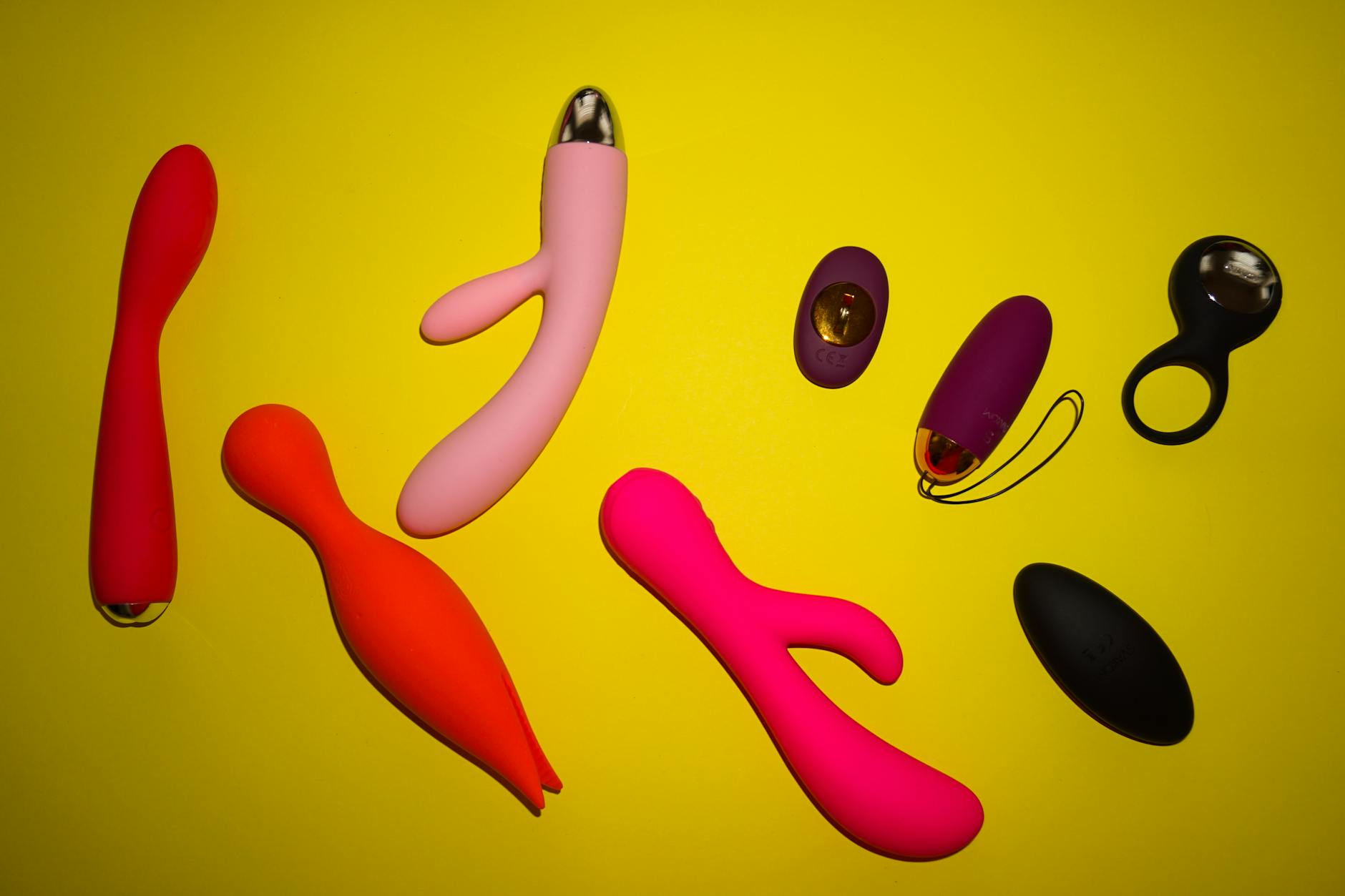
How Lemon Vibrators Compare to Finger Stimulation for Clitoral Orgasms
Let's be real: fingers got you here. Fingers were the first thing that worked, maybe the easiest thing, possibly still the most intimate way you experience touch. Then lemon vibrators showed up, and everything got complicated because now you're wondering if one is better than the other, or if switching between them is normal, or if preferring the vibrator means something about your body or your partnership.
It doesn't. What's actually happening is that your nervous system is responding to two wildly different types of stimulation, and both are legitimate, useful, and good.
The Basic Neurological Difference
Your clitoris has about 8,000 nerve endings packed into a structure smaller than a pea. These nerves transmit sensation to your brain via two main pathways: one that detects pressure and texture (what your fingers do), and one that detects vibration and rapid movement (what a lemon clitoral vibrator does). These aren't competing systems. They're parallel channels, and your brain lights up differently depending on which one is sending the signal.
When you use your fingers, you're generating friction, pressure, and precise manual control. Your finger adjusts in real time based on feedback: if something feels too intense, you lighten up immediately. If you want to concentrate stimulation on a specific spot, you can do that with millimeter precision. That responsiveness, that feedback loop between you and the sensation, creates a particular kind of arousal.
When you use a lemon vibrator, you're introducing rhythmic suction and vibration instead. The sensation doesn't depend on your manual effort. It creates a chain reaction in your nervous system that's more sustained, more consistent, and in many cases, faster to orgasm. The trade-off is that you lose some of the fine-tuning power. You can't adjust as precisely mid-stroke because the device is doing most of the work.
Why Fingers Feel Different
There's an intimacy to finger stimulation that goes beyond pure sensation. When a partner touches you with their fingers, you're reading their attention. You feel them respond to your breathing, hear them adjust based on sounds you make. You're having a conversation without words. That conversational quality is genuinely pleasurable for most people, separate from the physical stimulation itself.
Your own fingers add another dimension: control and self-knowledge. You know exactly what you like because you built that knowledge through years of solo exploration. There's no learning curve, no setup. You always have your hands with you. There's something deeply grounding about that.
Fingers also offer variable stimulation naturally. You can go slower or faster, change pressure, shift angles, combine clitoral touch with vaginal or anal stimulation seamlessly. You can tease. You can linger. You can do complex patterns that a vibrator, by design, cannot do.
Why Lemon Vibrators Work Better for Some Bodies
Here's where the comparison gets interesting. Some bodies respond more strongly to vibration than to manual friction. This isn't a preference issue. It's a neurological one.
People with higher sensory thresholds sometimes find finger stimulation too subtle. Hands alone won't get them over the edge because the intensity cap is too low. A lemon vibrator, especially one using suction technology, bypasses that threshold problem. The intensity is consistent, powerful, and non-negotiable. You can't accidentally lighten it like you might with your fingers.
Other bodies have what's sometimes called tactile sensitivity, which means direct friction on the clitoris starts to feel raw or overstimulating. A lemon vibrator spreads the sensation across a wider area. Suction, specifically, creates a gentler pull rather than a direct rub. For people with sensitive tissue, this is often more comfortable and ultimately more orgasmic than fingering alone.
Age and hormonal status also matter. After 50, as estrogen drops, clitoral tissue gets thinner and sometimes more sensitive to direct pressure. How to use lemon vibrators after 50 becomes less about novelty and more about functional anatomy. Suction-based stimulation often works better than traditional vibration for this reason, and both tend to work better than fingers alone once sensitivity increases.
When Manual Stimulation Actually Wins
Finger stimulation has advantages a vibrator cannot replicate.
First: temperature. Your partner's fingers are warm. A vibrator is room temperature. That warmth signals safety to your nervous system in ways that deepen arousal. It's also why many people like toys that have been held in a hand for a few minutes, or which are warmed under warm water before use.
Second: responsiveness. A partner's fingers adjust based on your feedback in real time. A vibrator runs at one speed, one pattern, until you physically change it. Some people find that loss of responsiveness frustrating because it removes the conversational element.
Third: combination play. Fingers let you stimulate multiple erogenous zones at once in ways that require coordination. Rubbing your clitoris while penetrating yourself vaginally, or stimulating your clitoris while being penetrated by a partner, is much easier with hands than with toys. You can layer sensations in real time.
Fourth: spontaneity. Fingers require no charging, no setup, no clean-up. You don't need to remember to charge your hands. This matters more than it sounds. Sometimes ease of access changes what feels possible.
How Lemon Vibrators Change Your Orgasm
Orgasms with lemon vibrators often feel different from finger-induced orgasms, and understanding that difference helps you appreciate both.
Finger orgasms tend to build gradually. There's a slow rise in arousal, then a peak, then a subsiding. They often feel more full-body because you have mental space to notice sensation beyond genital pleasure.
Vibrator orgasms often arrive faster and feel more localized. The intensity builds quickly, the peak can feel sharper, the release more concentrated. Some people describe vibrator orgasms as more intense. Others prefer the gentler arc of finger-based orgasms.
Neither is better. Different nervous systems prefer different patterns. Some people want both in the same session. Start with slow finger stimulation to build arousal, then switch to a lemon vibrator for the final intensity spike. Others prefer to pick one or the other based on how much time they have or what their body needs that day.
Using Them Together in Partnership
When you're with a partner, the conversation gets richer. One person can use fingers while another uses a lemon clitoral vibrator on you. Or you can alternate. Or trade off who's controlling what, which creates a dynamic of give-and-take that many couples find rewarding.
The key is not framing it as a replacement conversation. "I like vibrators better than your fingers" is different from "I like vibrators in addition to your fingers." The first shuts down intimacy. The second expands it.
If your partner is worried that you want vibrators instead of their touch, that's often about anxiety, not about the toy. It helps to be explicit: "I orgasm faster with the vibrator, and sometimes that's what I want. I also still want your hands on me." Both can be true simultaneously.
The Sensitivity Angle
Why lemon vibrators work better for sensitive clitoral tissue relates directly to this comparison. Sensitive tissue often responds better to broad, distributed stimulation (like suction) than to pointed, concentrated friction (like fingers). If your clitoris hurts with direct finger contact but feels great with a lemon vibrator, that's not a sign that something is wrong with you. It's sensory data telling you what your specific nervous system prefers.
This also changes over time. You might love finger stimulation in your twenties, prefer vibrators in your forties, and want fingers again in your sixties. Bodies change, and what felt optimal five years ago might not feel optimal now.
How to Know Which You Actually Prefer
The honest way to figure this out is solo experimentation. Spend a week with just fingers, paying attention to what feels good, how long it takes, what the orgasm quality is. Then spend a week with a lemon vibrator, same observational approach. You might discover you have a genuine preference. You might discover you like them for different moods. You might learn that you need one more than the other on any given day depending on stress, energy level, or hormonal cycle.
Then, if you have a partner, bring what you learned into that conversation. "I noticed I need about 20 minutes with fingers to get there, but only 8 with the vibrator" is useful data. "I like the way fingers feel, but vibrators get me over the edge faster" is honest and specific.
You don't have to choose a side. The whole point of having access to both is that you get to match the tool to what you need.
FAQ: Lemon Vibrators Versus Fingers
Do lemon vibrators desensitize you to finger stimulation?
No, but it's a common worry. What happens is that your body adapts to different types of stimulation, which is normal. If you only use a vibrator and then switch to fingers, fingers will feel less intense at first because you've become accustomed to a different sensation pattern. Spend a few sessions with fingers, and your sensitivity recalibrates. It's not permanent desensitization. It's just neurological adaptation, which goes both directions.
Can you use a lemon vibrator if you can only orgasm with fingers?
Absolutely. Some bodies genuinely prefer finger-based stimulation and may never prefer vibrators. That's completely valid. A lemon vibrator is an option, not a requirement. If fingers work, keep using fingers. The goal is orgasm and pleasure, not checking boxes on toy usage.
Is it normal to prefer vibrators over a partner's fingers?
Completely normal. Many people orgasm faster or more consistently with vibrators than with manual stimulation from a partner, even a partner they love deeply. This is usually about nervous system preference and physical anatomy, not about the partner or the relationship. The key is communicating this without making it about rejection.
Can you use lemon vibrators and fingers in the same session?
Yes, and many people find this ideal. Use fingers for the slow buildup, then switch to a lemon vibrator for the final push. Or do it in reverse. Or use them simultaneously if you have two hands or a partner involved. Mixing modalities often creates more complex, satisfying arousal than either alone.
Do lemon suction vibrators work the same way as fingers do?
No, suction works fundamentally differently from finger friction. Suction creates a pulling sensation across a broader area rather than focused pressure on a single point. This is actually why many people prefer suction toys to traditional vibrators when comparing them to finger stimulation. The sensation profile is less similar to fingers, which makes it feel more novel and different in a good way.
What if I can orgasm with a lemon vibrator but not with fingers?
That's a sign your nervous system has a higher sensory threshold and responds better to sustained, consistent intensity. This is especially common in people over 40, people on certain medications that affect sensation, and people with certain neurological profiles. It's not a dysfunction. It means you've found what works and should keep using it. You might also explore why fingers don't work (raw tissue sensitivity, tactile overwhelm, pressure preference) and adjust accordingly.
The Real Answer
Your clitoris doesn't care whether it's being touched by a finger, a lemon vibrator, or anything else. It cares about the quality of sensation and whether that sensation creates arousal in your specific nervous system. Fingers and lemon vibrators create different sensations, so they'll likely feel different. Neither is objectively better. They're different tools for different jobs, different moments, different bodies, different moods.
You get to use both. You get to prefer one. You get to change your mind. That's the whole point.
If you're just starting to explore how your body responds to different types of stimulation, take your time. How to get maximum pleasure from lemon vibrators breaks down technique, but the real work is listening to what your body actually enjoys, not what you think you should enjoy.
Both fingers and toys are tools for pleasure. Use the one that works. Use both if you want. Your pleasure matters more than the method.